
Acoustic slat walls, fitted in London
Real wood-veneer slats on a recycled acoustic felt backing — warm, architectural and noticeably calmer-sounding. Designed with you and fitted by our own joiners, most walls in a single day.
- Strong echo control
- Most walls fitted in a day
- Quote after seeing your wall

Why slat walls are the UK’s favourite feature wall
An acoustic slat panel is a set of wood-veneered slats bonded to a thick felt backing made from recycled PET. On the wall you get crisp vertical lines and soft shadows; behind the scenes the felt between the slats soaks up sound reflections, so the room echoes less and voices sound clearer.
Panels are usually about 60 cm wide and come in heights from 240 to 300 cm, so most UK rooms can be done floor to ceiling without joins. Natural oak suits Scandinavian and Japandi rooms, smoked oak and walnut feel richer, and black slats on black felt make a dramatic TV or bar wall.
Are slat walls going out of style? We don’t think so. The look has moved on from the first flat-pack trend to properly fitted, built-in walls — full-height, scribed to the ceiling, with LED lighting and joinery around them. That’s the version that still looks good in ten years.
At a glance
- Panel size
- ≈ 60 cm wide × 240, 270 or 300 cm tall
- Slats
- Real wood veneer on MDF (oak, walnut, black and more)
- Backing
- Recycled PET acoustic felt — black, grey or beige
- Sound
- Absorbs echo and reverberation (not soundproofing)
- Fixing
- Adhesive and screws, or battens with insulation for maximum absorption
- Fitting time
- Usually one day per wall
- Finishes
- Natural oak
- Honey oak
- Whitewashed oak
- Smoked oak
- Walnut
- Black
Rooms that suit acoustic slat walls
Home offices
Clearer calls and a backdrop that looks professional on camera.
Living rooms & TV walls
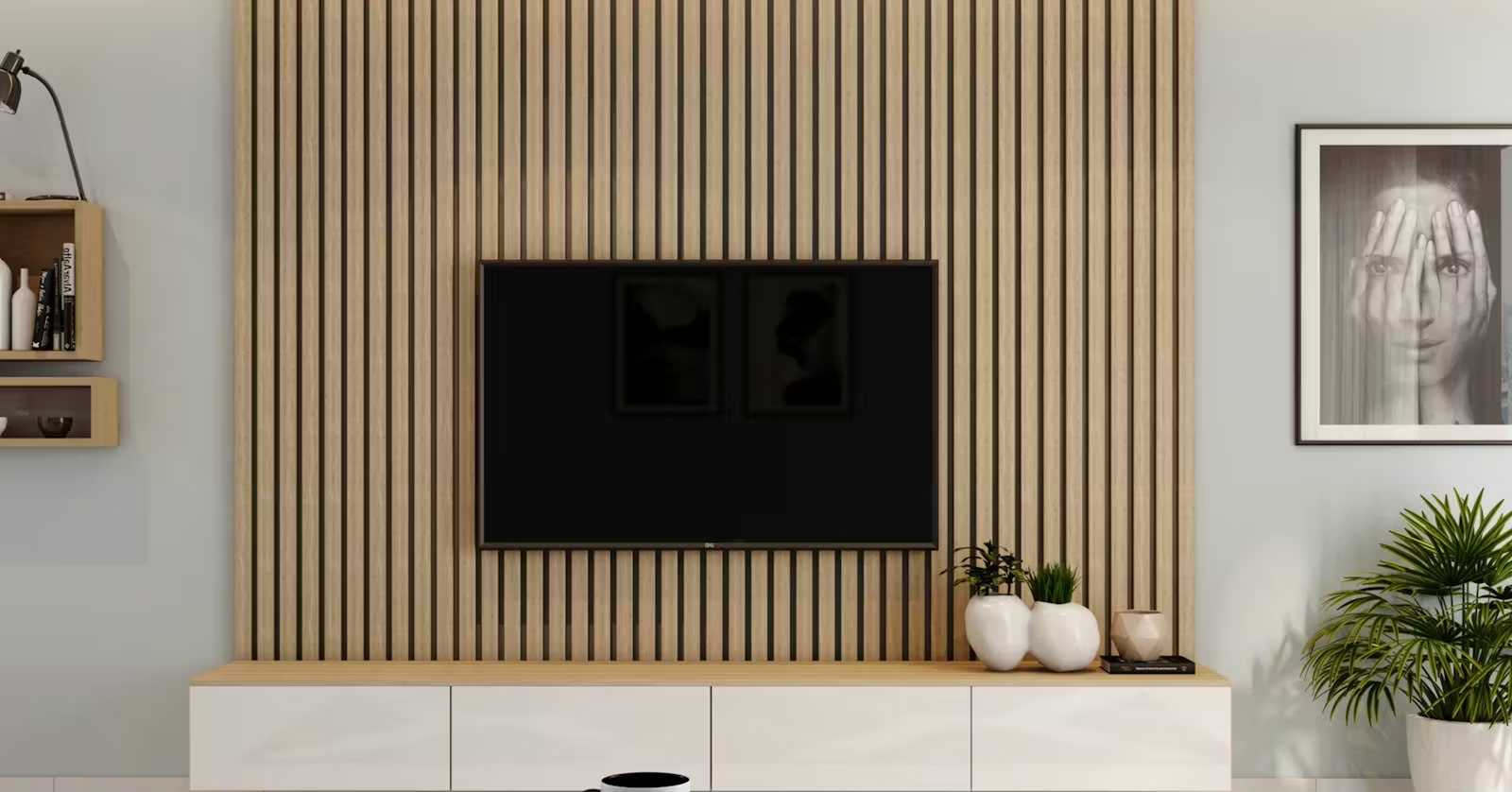
Slats behind the TV hide cables and frame the screen.
Bedrooms
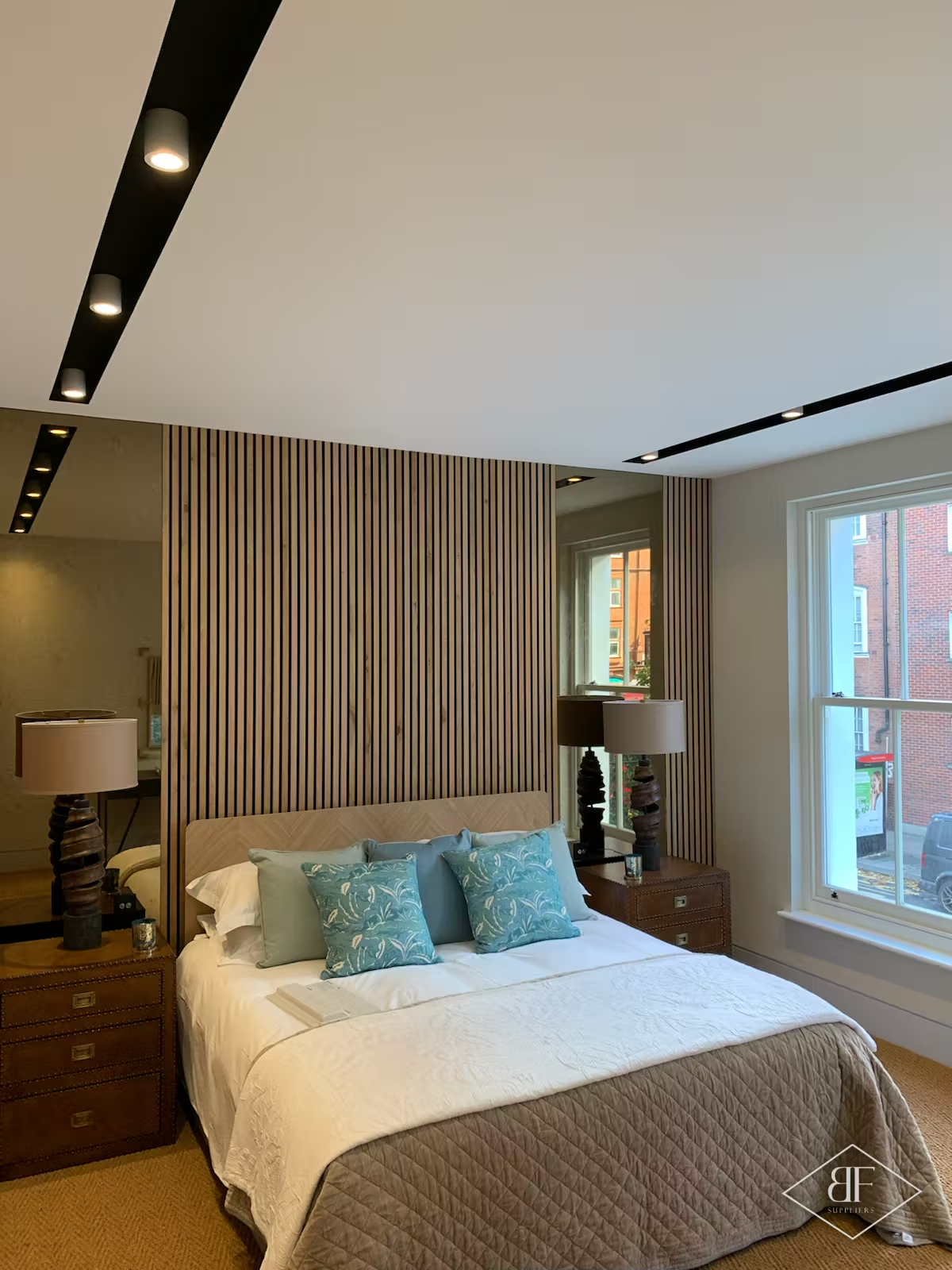
A floor-to-ceiling headboard wall that feels like a boutique hotel.
Hallways & stairs
Vertical lines make low ceilings feel taller.
Offices & receptions
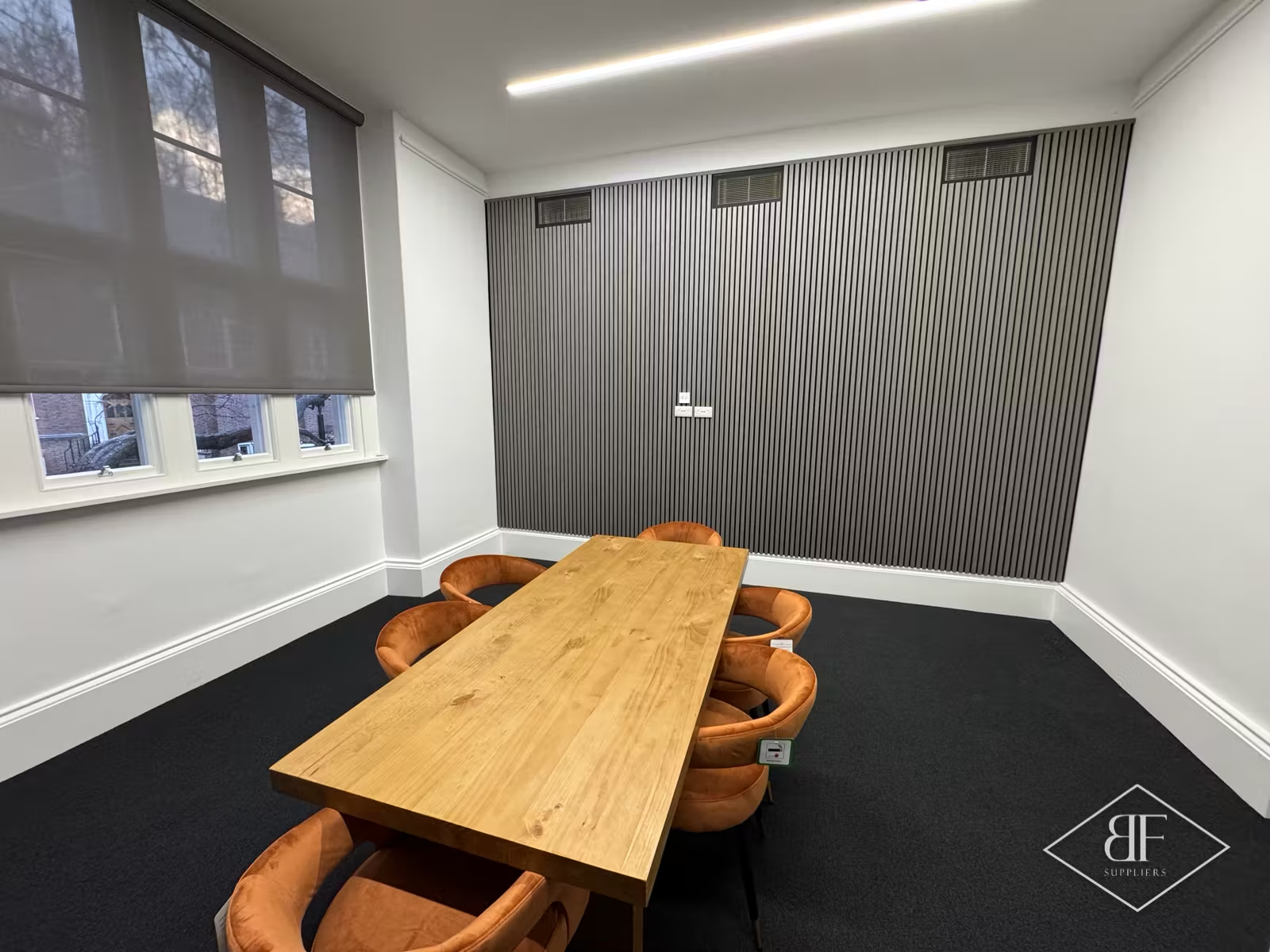
Calmer meeting rooms and a warm first impression.
Ceilings
Slats overhead are one of the best ways to tame a noisy open-plan room.
The details that make it look built in
- We check the wall is flat and scan for cables and pipes before we fix anything.
- The layout is planned so the end slats match on both sides and joints land in the felt, where they disappear.
- Panels are scribed to uneven ceilings, floors and corners — no visible gaps.
- Sockets and switches are brought forward on extension boxes so faceplates sit flush on the slats.
- Clean returns with end trims or mitred corners, and optional LED channels set into the wall.
- We vacuum, take the off-cuts away and leave the room ready to use.

Ideas to steal
Inspiration photos and visualisations to help you choose a look — for our own projects see our work.

Projects by our team
Real projects photographed on site.
Are slat walls going out of style?
The cheap, stuck-on version is losing appeal; properly fitted, full-height slat walls in natural wood are still one of the most requested feature walls in UK homes. Choosing a timeless veneer (oak, walnut) and building the wall in — scribed, trimmed and lit — keeps it looking current.
Do acoustic slat panels really reduce noise?
They reduce echo inside the room, which is what makes home offices and open-plan rooms sound hollow. They don’t stop noise travelling from next door or from the street — that needs soundproofing, which is a different job. Mounting the panels on battens with insulation behind improves absorption further.
Can you put a TV on a slat wall?
Yes. We plan the TV position first, fix the bracket through the panels into the wall or into added timber behind, and route cables in the gaps or behind the wall so nothing shows.
Can slat panels go on a ceiling?
Yes — screwed into the joists, they look striking and are very effective for echo in open-plan rooms, offices and cafés.
Can you fit around sockets, switches and windows?
That’s exactly where fitting makes the difference. We cut cleanly between slats and bring sockets and switches forward so they sit flush and stay safe to use.
How do I look after a slat wall?
Dust with a soft brush attachment on the vacuum. Veneer can be wiped with a slightly damp cloth; oiled finishes are best for busy areas.
Other feature walls we fit
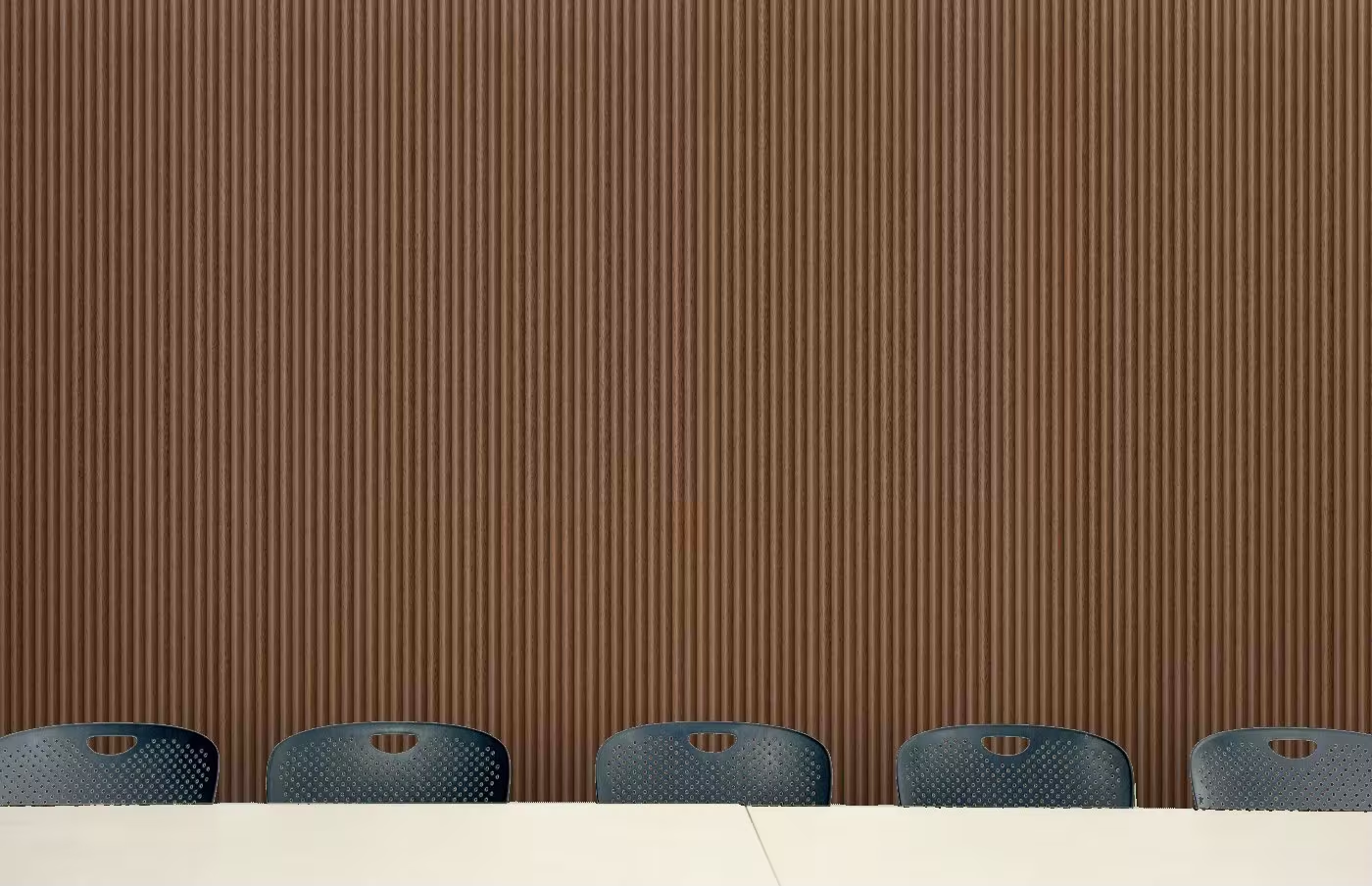
- Natural oak veneer
- Walnut veneer
- Primed – painted bone
- Painted sage
- Painted indigo
- Painted charcoal

- Sage green
- Olive
- Deep forest green
- Indigo blue
- Charcoal black
- Bone white

- Olive
- Honey yellow
- Terracotta
- Muted violet
- Deep blue
- Oatmeal
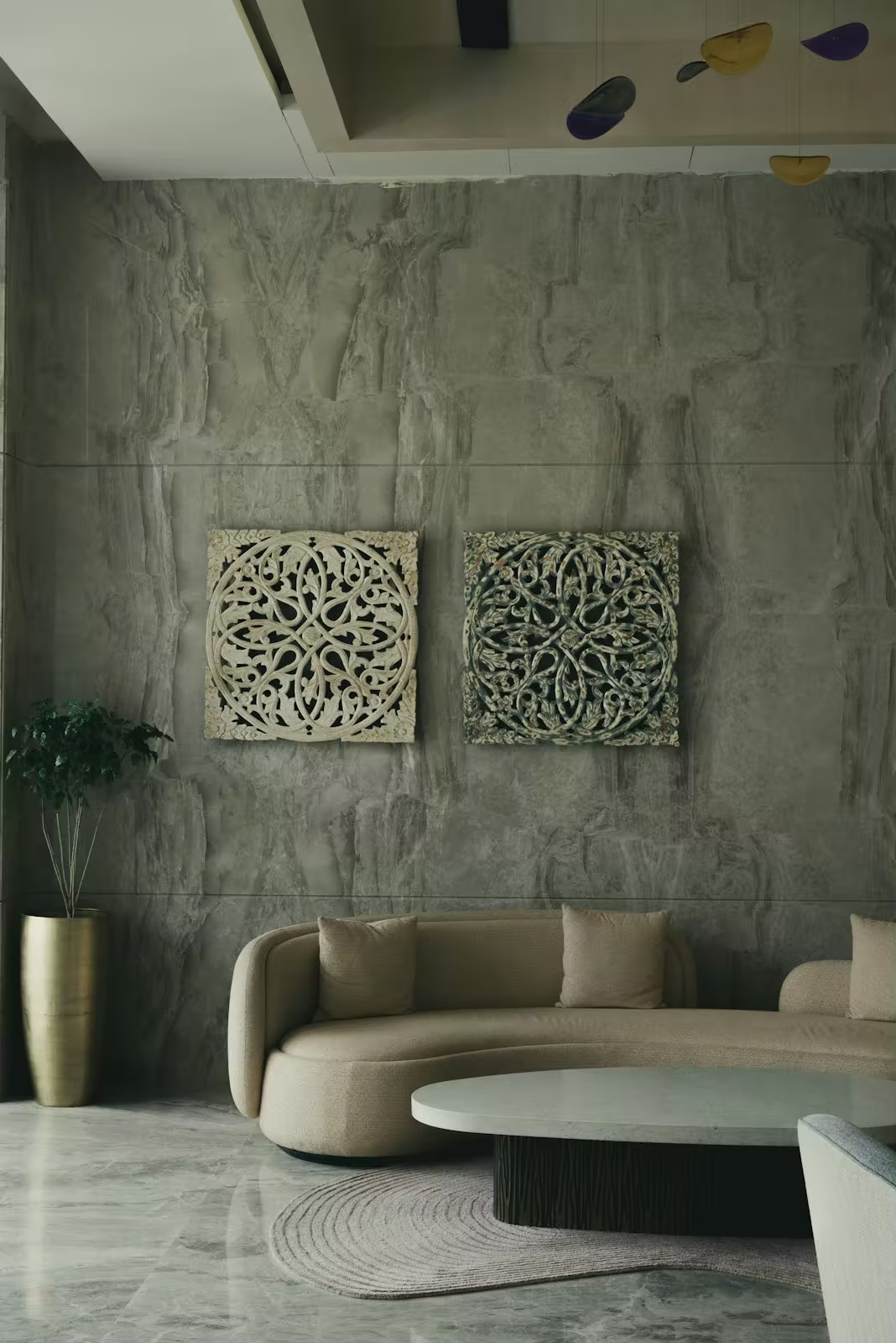
- Cream ashlar
- Honey sandstone
- Grey limestone
- Slate
Ready for a wall you’ll love?
Send a photo of your wall on WhatsApp, book a visit or ask for a quote — whichever is easiest. We’ll come back with ideas and a clear, itemised quote.