
Fluted wall panels, fitted in London
Rounded ribs that catch the light from every angle. Oak or walnut veneer, or primed to paint in any colour — on TV walls, hallways, kitchen islands, headboards and curved bar fronts.
- Mostly decorative
- Most walls fitted in a day
- Quote after seeing your wall
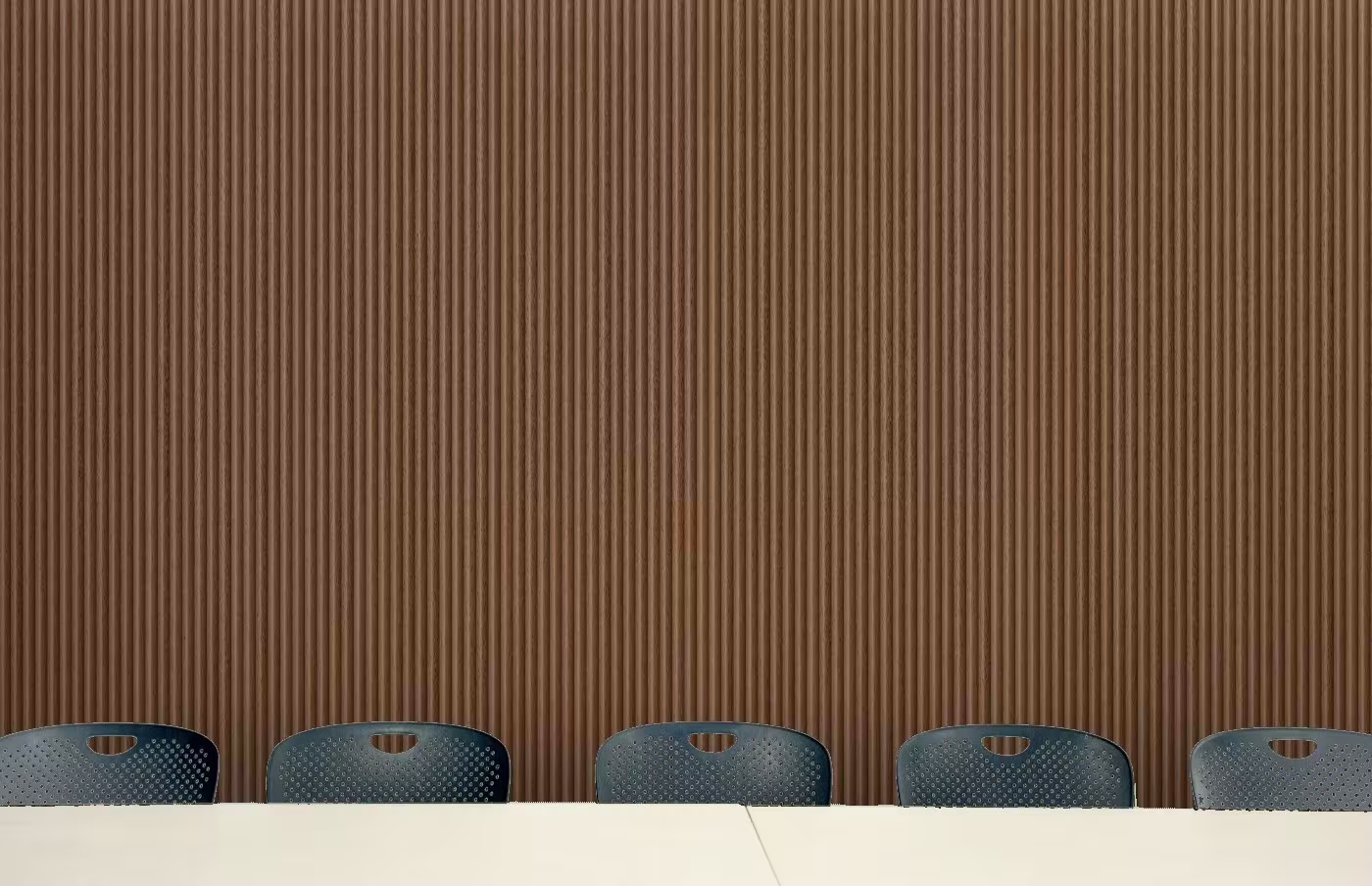
Fluted or reeded — and why it works
Strictly speaking, fluting is a run of concave grooves and reeding is a run of convex, rounded ribs — but in UK interiors both names are used for the same thing: a panel of half-round ribs that creates a soft, rhythmic pattern of light and shadow.
Fluted panels are mainly decorative. They change how a room looks rather than how it sounds, so if echo is the problem we’ll point you to slats or felt instead (or combine them).
Veneered panels give a warm, natural look. Primed panels can be painted to match the walls for the colour-drenched look, or in a contrasting shade for a statement. Flexible versions bend around curves, columns and island ends.
At a glance
- Panel size
- Narrow panels ≈ 25–30 cm wide × 200–300 cm
- Materials
- Oak or walnut veneer, primed MDF or flexible panels
- Finish
- Natural veneer, or painted in any colour
- Sound
- Decorative — little acoustic effect
- Curves
- Flexible panels for islands, columns and bar fronts
- Fitting time
- Usually one day per wall, plus painting if needed
- Finishes
- Natural oak veneer
- Walnut veneer
- Primed – painted bone
- Painted sage
- Painted indigo
- Painted charcoal
Rooms that suit fluted wall panels
TV walls
Ribs behind the screen add depth without visual clutter.
Hallways
A tactile, hard-wearing finish for the busiest wall in the house.
Kitchen islands & bars
Flexible fluting wraps round curves and island ends.
Headboards
Painted fluting in a soft colour behind the bed.
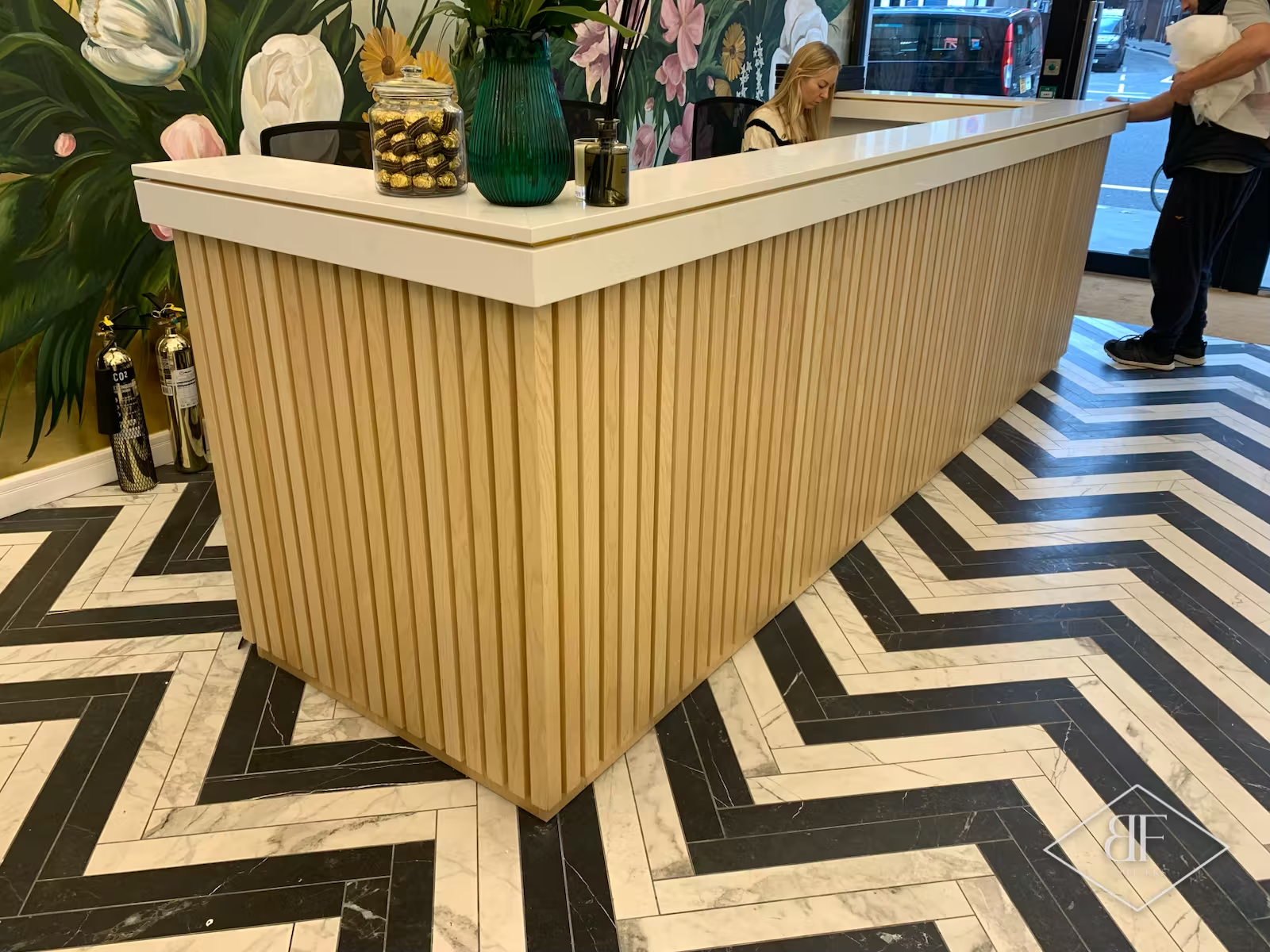
Reception desks
A curved fluted front for a memorable first impression.
Wardrobes & doors
Fluted fronts turn plain joinery into a feature.
The details that make it look built in
- Joints are placed on the line between ribs, where they’re virtually invisible.
- Panels are scribed to the ceiling and floor so the ribs stay perfectly vertical.
- Primed panels are filled, caulked and painted for a seamless finish — or left ready for your decorator.
- Curves are formed with flexible panels on a properly prepared substrate.
- Edges are finished with returns, shadow gaps or trims, and LED strips if you’d like the ribs washed with light.
Ideas to steal
Inspiration photos and visualisations to help you choose a look — for our own projects see our work.
Projects by our team
Real projects photographed on site.
What’s the difference between fluted and reeded panels?
Architecturally, fluting is concave (grooves) and reeding is convex (rounded ribs). In UK homes both names are used for panels with half-round ribs — we’ll show you the profile options before you choose.
Can fluted panels be painted?
Yes. Primed MDF panels are designed to be painted any colour. Veneered panels are finished with oil or lacquer instead.
Can fluted panels go around curves?
Yes, using flexible fluted panels. They’re ideal for kitchen islands, curved bars, columns and reception desks.
Do fluted panels help with acoustics?
Only slightly. If you want less echo, choose acoustic slats or felt — or combine fluting with acoustic panels elsewhere in the room.
Are fluted panels hard to clean?
No — dust along the ribs with a soft brush or microfibre cloth. Painted panels can be wiped down.
Can you put a TV or shelves on fluted panels?
Yes. We add solid fixing points behind the panels so brackets and floating shelves are secure.
Other feature walls we fit

- Natural oak
- Honey oak
- Whitewashed oak
- Smoked oak
- Walnut
- Black

- Sage green
- Olive
- Deep forest green
- Indigo blue
- Charcoal black
- Bone white

- Olive
- Honey yellow
- Terracotta
- Muted violet
- Deep blue
- Oatmeal
- Cream ashlar
- Honey sandstone
- Grey limestone
- Slate
Ready for a wall you’ll love?
Send a photo of your wall on WhatsApp, book a visit or ask for a quote — whichever is easiest. We’ll come back with ideas and a clear, itemised quote.